“Hiring Compliance in India: 10 Checks HR Teams Should Never Overlook”
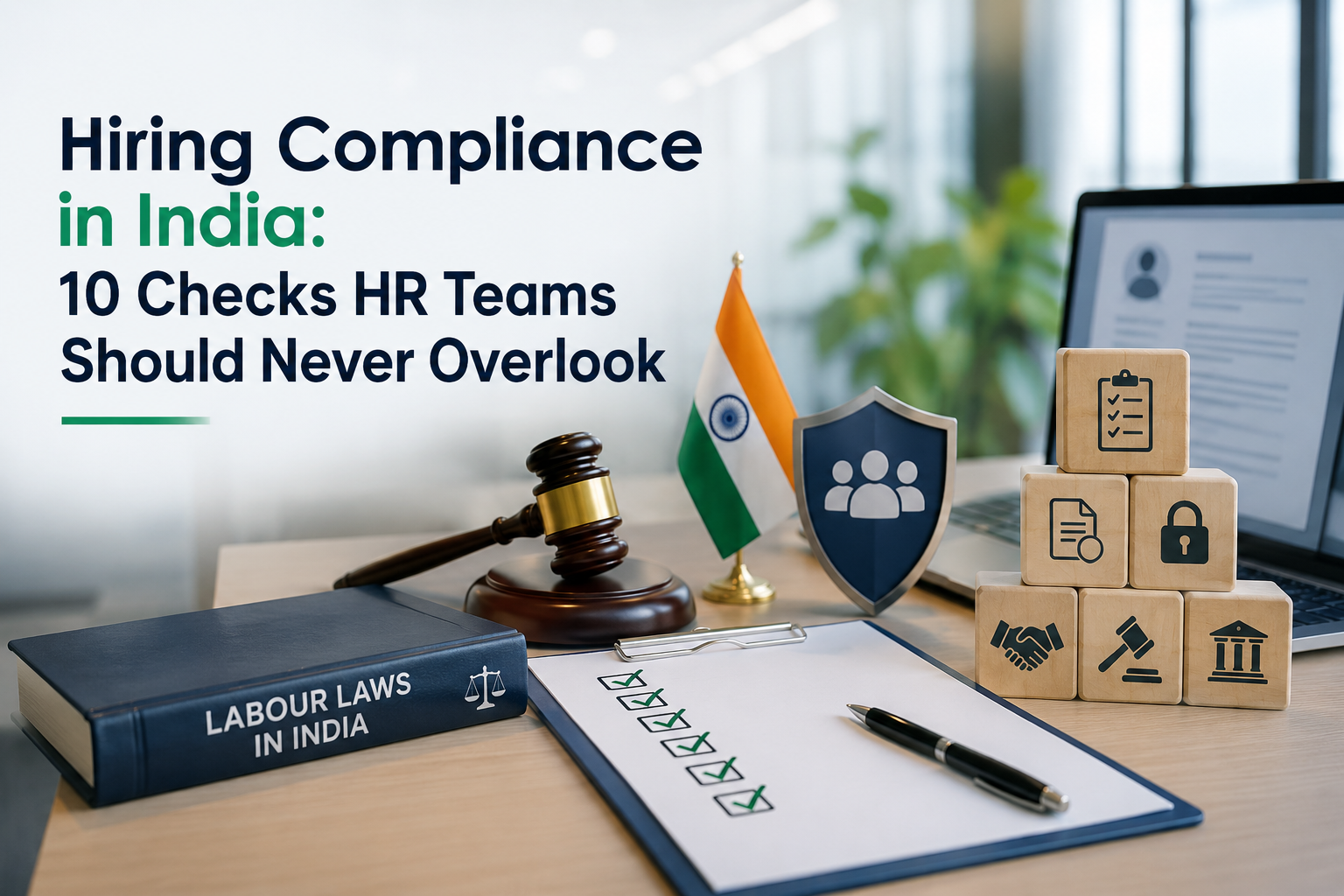
"Hiring compliance is more than completing background checks. HR teams must ensure candidate data is collected transparently, verified responsibly, stored securely, and handled according to applicable privacy and employment requirements. Discover the 10 essential compliance checks every HR team should consider during hiring and background verification."
Hiring Compliance in India: 10 Checks HR Teams Should Never Overlook
Hiring the right candidate is important. Hiring the right candidate while staying compliant is critical.
In today's hiring environment, background verification is no longer just a final step before onboarding. HR teams handle sensitive candidate information throughout the recruitment process, making privacy, security, fairness, and documentation essential.
Here are 10 important compliance checks every HR team should consider during hiring and background verification.
1. Get Proper Candidate Authorization
Before starting a background verification, ensure the candidate receives the required information about the verification process and provide appropriate authorization or consent where applicable.
Clearly communicate what information will be checked, why it is required, and how it may be used.
2. Collect Only Relevant Information
More data does not mean better verification.
HR teams should collect only information that is relevant and necessary for the hiring or verification purpose. Avoid collecting unnecessary personal information simply because it is available.
The rule is simple: Collect what you need, not everything you can.
3. Protect Candidate Data
BGV may involve identity documents, employment records, educational certificates, addresses, and other personal information.
Organizations should use appropriate security measures such as:
-
Restricted access
-
Secure data transfer
-
Authentication controls
-
Access monitoring
-
Appropriate encryption and security safeguards
Candidate data should only be accessible to authorized personnel.
4. Verify Identity Accurately
Identity verification is the foundation of a reliable background check.
HR teams should ensure that the candidate's identity information and submitted documents are consistent and appropriately verified before relying on the results of other checks.
5. Verify Employment & Education Claims
Resume discrepancies can create significant hiring risks.
Employment verification can help validate details such as:
-
Previous employer
-
Designation
-
Employment dates
-
Relevant employment history
Education verification can help confirm:
-
Institution
-
Qualification
-
Course
-
Year of completion
-
Credential information
Verification should focus on claims that are relevant to the position.
6. Handle Criminal Checks Carefully
Criminal-record verification requires particular care.
A criminal-record finding should not automatically result in rejection. HR teams should consider the accuracy of the information, the nature and relevance of the matter, applicable requirements, and the candidate's opportunity to provide clarification where appropriate.
A red flag should trigger review not an automatic decision.
7. Give Candidates an Opportunity to Explain Discrepancies
Not every discrepancy indicates fraud.
Differences can occur because of:
-
Administrative errors
-
Different date formats
-
Name changes
-
Employer record differences
-
Documentation issues
For material discrepancies, organizations should follow a consistent process for validation and, where appropriate, allow the candidate to provide clarification before making a final decision.
8. Define Data Retention & Deletion
Completing a background check does not mean the data should be stored forever.
HR teams should establish clear policies covering:
-
What information is retained
-
Why it is retained
-
Who can access it
-
How long it is retained
-
When and how it is securely deleted
The objective should be to avoid unnecessary retention while meeting applicable legal and business requirements.
9. Monitor Third-Party BGV Vendors
Many organizations use external background verification providers. However, outsourcing verification does not eliminate the employer's responsibility to maintain appropriate governance.
Before working with a BGV provider, HR teams should evaluate:
-
Data-security practices
-
Verification methodology
-
Access controls
-
Data retention policies
-
Incident-management processes
-
Audit capabilities
Your BGV vendor may perform the check, but your organization still needs oversight.
10. Maintain a Clear Audit Trail
A strong compliance process should be traceable.
HR teams should maintain appropriate records of:
-
Candidate authorization
-
Checks initiated
-
Verification results
-
Discrepancies identified
-
Candidate clarifications
-
Final decisions
-
Access to verification information
-
Retention or deletion actions
An effective audit trail helps organizations demonstrate that their hiring process was structured, consistent, and accountable.
A Quick Hiring Compliance Checklist
Before completing a background verification process, HR teams should ask:
-
Is the candidate properly informed about the verification process?
-
Are we collecting only relevant information?
-
Is candidate data adequately protected?
-
Have identity, employment, and education claims been appropriately verified?
-
Are criminal checks being handled carefully and consistently?
-
Have material discrepancies been reviewed fairly?
-
Do we have a clear retention and deletion policy?
-
Has our BGV vendor been properly assessed?
-
Can we trace important verification activities?
-
Can we explain how the final hiring decision was reached?
Final Takeaway
Background verification is no longer simply a box to tick before onboarding.
For modern organizations, it is an important component of risk management, data governance, and responsible hiring.
HR teams need to look beyond:
"Did we verify the candidate?"
and ask:
- Did we collect the right information?
- Did we use it for the right purpose?
- Did we follow an appropriate authorization and transparency process?
- Did we protect the information?
- Did we give candidates a fair opportunity to address material discrepancies?
- Did we manage our BGV vendors responsibly?
- Can we demonstrate what happened throughout the process?
- Are we retaining information only as long as necessary?
India's data-protection landscape is continuing to evolve, particularly following the notification of the DPDP Rules, 2025 and their phased commencement.
For HR leaders, the message is clear:
A compliant hiring process is not just about finding the right person. It is about verifying the right information, protecting it properly, and making decisions through a process that is fair, transparent, and accountable.
Organizations that build compliance into their BGV workflow can strengthen both candidate trust and organizational risk management.
Conclusion
Hiring compliance is not simply about completing a background check. It is about creating a verification process that is transparent, secure, relevant, consistent, and accountable.
As organizations increasingly use technology and third-party platforms for background verification, HR teams need to make compliance part of the workflow not an afterthought.
Because hiring the right candidate matters. But verifying them the right way matters too.
Disclaimer: This article is for general informational purposes and should not be considered legal advice. Organizations should seek professional legal guidance for requirements applicable to their specific hiring processes and industry.