You Never Interviewed the Candidate: The Rise of Deepfake Interviews in Modern Hiring "The interview looked real. The identity wasn't."
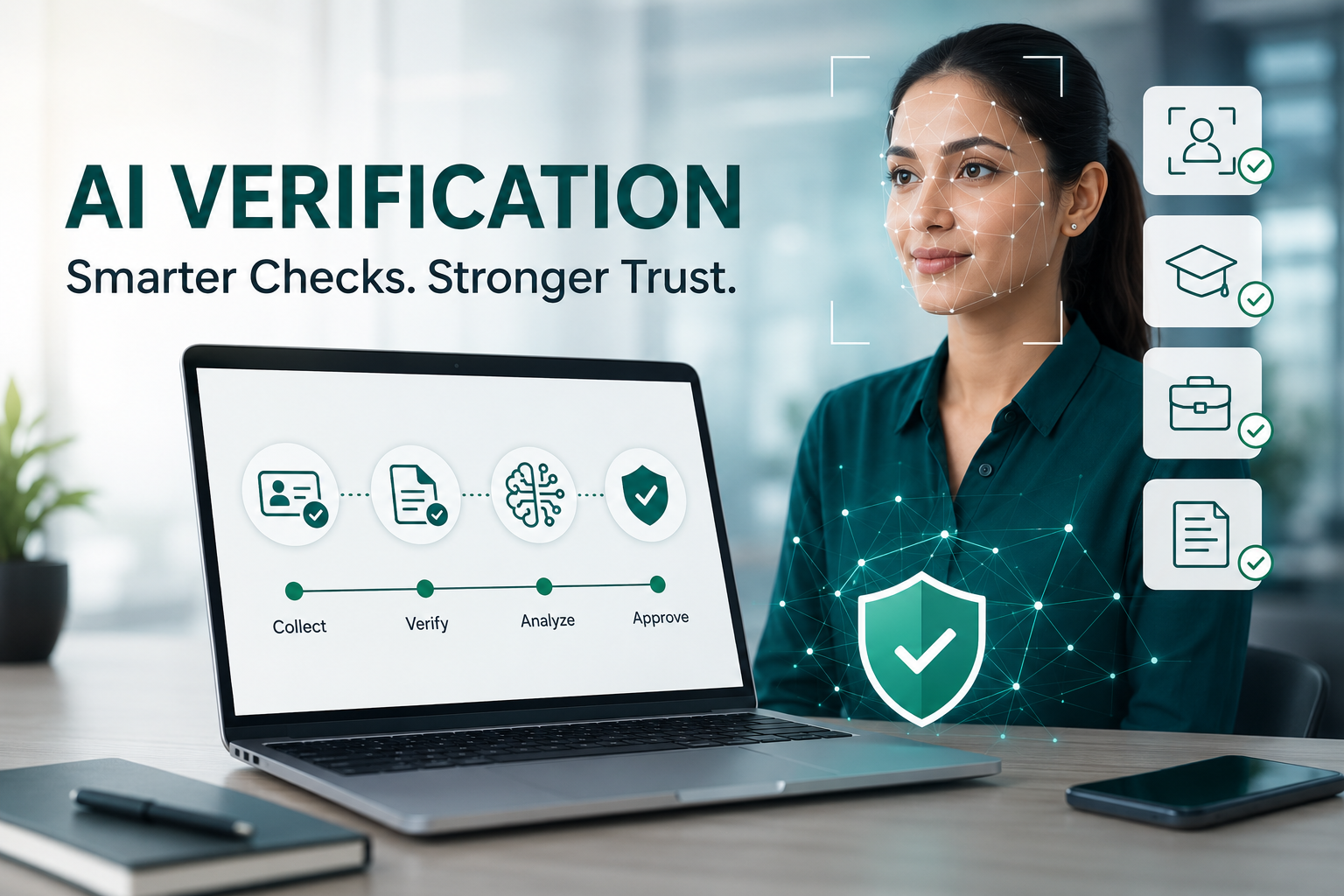
"Virtual hiring has transformed recruitment—but it has also introduced new risks. Deepfake interviews use AI-powered face swapping, voice cloning, and identity manipulation to help fraudsters impersonate candidates during online interviews. As a result, organizations may unknowingly hire someone different from the person they interviewed."
You Never Interviewed the Candidate: The Rise of Deepfake Interviews in Modern Hiring
The interview looked real. The identity wasn't.
The short answer
Deepfake interview fraud is when someone uses AI-generated video, voice cloning, or a live "face swap" filter to impersonate a job candidate during a video interview — either to get a job they aren't qualified for, or to let a stand-in do the actual work after hire. It has gone from a rare edge case to a mainstream hiring risk in the last two years, and traditional video interviews can no longer be trusted to confirm that the person on screen is the person who gets hired. This is the exact gap Appexigo's AI verification technology is built to close.
It's not a hypothetical anymore
For years, "what if someone fakes their way through a video interview" sounded like a thought experiment. It isn't one now. A 2026 Greenhouse report found that 91% of U.S. hiring managers have encountered or suspected AI-generated interview answers during online meetings. Across 19,368 live interviews, 38.5% of all candidates were flagged for AI-cheating behavior, a rate that tripled from 9% to 45% in just three months of late 2025.
The fraud isn't limited to candidates quietly reading AI-generated answers off a second screen, either. In one widely reported 2024 case, a man landed a job at Infosys by having a friend impersonate him during the video interview and was fired and criminally charged for impersonation within two weeks, once his on-the-job performance gave him away. Checkr research found that 23% of companies have already reported identity fraud among new hires, and Gartner projects that by 2028, one in four candidate profiles worldwide will be fake.
Regulators and analysts are treating this as a top-tier risk, not a niche one. Experian's 2026 Future of Fraud Forecast named deepfake job candidates one of the top five fraud threats of the year, and Gartner warns that roughly 30% of enterprises will find their standard identity verification tools can no longer reliably tell a real face from a deepfake by the end of 2026.
How a deepfake interview actually works
A convincing fake candidate is usually built from a combination of the same few tools:
- Real-time face swap filters that overlay a different face onto a live video feed, so the person answering questions looks like someone else entirely.
- Voice cloning, trained on a short sample of someone's real voice, used to answer in a different accent, pitch, or identity than the person actually typing or speaking.
- Proxy interviewing, where a more qualified person interviews on the applicant's behalf, and the original applicant (or a third person) shows up to do the actual job later.
- Synthetic identity kits, which pair stolen personal data with AI-generated photos and documents to create an entirely fabricated candidate who passes a basic background check.
Scammers increasingly stack these techniques using deepfake audio and video to pass interviews for multiple remote roles at once, then relying on AI agents to help produce the actual work output while collecting several full-time salaries in parallel. The economics make this attractive to attackers: building one convincing fake identity is cheap, and it can be reused and pushed through applications at volume until one gets through.
This isn't limited to opportunistic individuals, either. The U.S. Department of Justice has unmasked rings of North Korean IT workers who posed as remote developers at U.S. companies using doctored profiles and deepfake techniques, funneling their salaries back to the regime, and staffing firms report the same infiltration pattern accelerating quarter over quarter.
Why video interviews stopped being proof of identity?
Video used to feel like a trust anchor if you can see someone's face and hear their voice in real time, surely that's them. That assumption quietly broke somewhere around 2024–2025, for a few structural reasons:
- Consumer-grade deepfake tools got good enough. Real-time filters that once required technical skill are now point-and-click, and run smoothly on ordinary hardware and bandwidth.
- Remote hiring removed the in-person checkpoint. A fully remote pipeline may never require the candidate to appear anywhere physical, which removes the one moment fraud is hardest to fake.
- Detection hasn't kept pace with generation. Nearly two-thirds of hiring managers believe candidates have become better at using AI to fool interviewers than recruiters have become at spotting them.
- The tells are getting harder to see. Older advice watch for lip-sync lag, odd blinking, or artifacts around the hairline still helps, but it assumes a human reviewer is watching closely on every call, in real time, for a problem they were never trained to catch.
The result is an arms race that's expensive to fight with human vigilance alone. 72% of recruiting leaders are now conducting in-person interviews specifically to combat fraud, and companies including Google, McKinsey, and Cisco have quietly reintroduced mandatory in-person rounds a real cost in time, travel, and candidate friction, and one that doesn't scale to every role or every geography.
The collateral damage: honest candidates pay for it too
It's worth naming the part of this story that gets less attention: the overwhelming majority of candidates are exactly who they say they are, and they're now interviewing inside a climate of suspicion they did nothing to create. Rolling back to in-person-only processes, adding surprise "turn your head" checks mid-interview, or treating every video artifact as a red flag all impose real friction on legitimate applicants and can introduce their own bias, penalizing candidates whose camera setup, lighting, or natural mannerisms simply don't match what a detection method expects.
That's the core tension modern hiring teams are trying to solve: catch the fraud without turning every honest applicant into a suspect.
Why detection alone isn't the fix verification is?
Most of the advice available today is reactive: watch for lip-sync issues, ask a candidate to move under different lighting, listen for unnatural pauses. These tactics help, but they put the burden on a recruiter's judgment, in real time, on every single call and they're a moving target, since detection techniques age out as quickly as new generation techniques appear.
A more durable answer is to verify identity before it's a judgment call confirming who someone is at the moments that matter (application, interview, offer, day one) rather than trying to eyeball a live video feed for signs of fakery. That's the shift Appexigo focuses on: building AI-powered verification into the hiring workflow itself, so identity is confirmed with evidence, not inferred from how convincing someone looks on a call.
A short checklist for hiring teams right now
- Add identity verification at the start of the funnel, not just at background-check stage by the time a background check runs, a fabricated identity has often already cleared several interview rounds.
- Don't rely solely on human reviewers to spot deepfakes in real time; pair judgment with AI-based liveness and biometric checks.
- Verify continuity between the interview and day one, not just the interview itself this is where proxy hiring and "ghost worker" schemes are caught.
- Communicate verification steps clearly to candidates so honest applicants understand why the extra step exists, rather than experiencing it as unexplained suspicion.
- Treat this as an ongoing process, not a one-time fix fraud techniques and detection methods are both evolving quickly, and last year's checklist won't catch this year's tactics.
FAQ
What is a deepfake job interview? It's a video interview in which the applicant's real appearance or voice has been digitally altered or replaced usually through a real-time face-swap filter or a cloned voice so the interviewer is evaluating a fabricated identity rather than the actual person applying or eventually doing the job.
How common is deepfake interview fraud in 2026? Common enough that major employers now treat it as a standard hiring risk rather than a rare exception. Independent surveys throughout 2026 put the share of hiring managers who've encountered suspected AI-generated or fake candidates well above 50%, with several putting it above 90%.
Can you tell a deepfake apart just by watching the video? Sometimes lip-sync lag, unnatural blinking, and artifacts around the hairline are known tells but detection tools have improved to the point where relying on a human reviewer's eyes alone is no longer considered sufficient by most security-conscious hiring teams.
Is going back to fully in-person interviews the only solution? It's one response, and some large employers have adopted it, but it's not the only one and it doesn't scale for distributed or fully remote teams. Identity verification technology built into the remote workflow document checks, liveness detection, and continuity checks through to day one addresses the same risk without giving up remote hiring altogether.
Appexigo builds AI-powered identity verification for modern hiring — helping teams confirm who they're actually interviewing, and who actually shows up on day one.